|
The Story Behind Surface Counseling
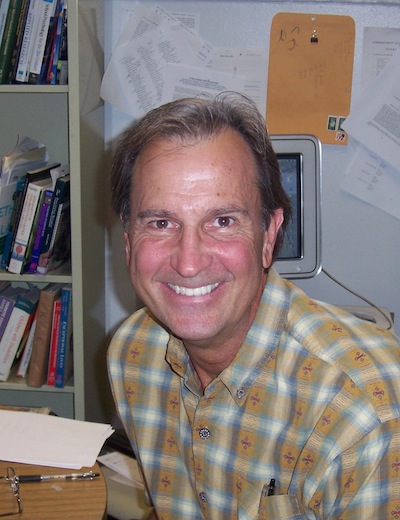
The term and basic rationale for Surface Counseling were mentioned in the original Alley and Deshler text (1979). I was intrigued by the idea because during my training and work in schools as a school psychologist, I noticed that teachers and even other professionals did not seem to be providing the kind of basic guidance that they could that would be helpful to students. With the advisement of Don Deshler and Jean Schumaker, I elaborated on the Surface Counseling concept, and we developed the Surface Counseling routine and the training program for teachers and other mentors who work with youngsters. Essentially, Surface Counseling is a method for mentors to use when working with youths to help them solve personal and social problems. The co-goal is for youngsters to become independent problem solvers. The skills and steps of Surface Counseling form the basis for a way of interaction, a routine for teacher/student communication.
My Thoughts about Surfacing Counseling
I see Surface Counseling as being a method of communication between teachers and students or between mentors and children in their charge. It is a professional and sincere way of dealing with children who are having problems socially. Some of the creative educators and counselors with whom I have worked with have translated the surface counseling methods and worksheets into daily or weekly social skills lessons in which students can be taught and role play the problems-solving steps in groups. In a broad way, Surface Counseling is very much a strategic method both in its delivery with children and in the problem solving steps that are embedded in the whole routine.
Feedback about Surface Counseling
A recent study by Loe, Jones, Crank, and Krach (2009) was undertaken to evaluate Surface Counseling for counselors and school psychologists in graduate training. Their study replicated the results of the original research study (see the research section on Surface Counseling). The outcome of the study has resulted in the use of the original Surface Counseling self-instruction methodology and material for graduate training in areas that are kindred to teacher education.
In another study, Lee and Crank (2005) used a qualitative method for gathering and evaluating teachers’ feedback about the Surface Counseling process with teachers making the following observations as a few examples: “It has a structured order;” “It allows students to help themselves;” “It shows students you care;” “It uses well-detailed checklists and worksheets;” “It gets the students to become involved in taking responsibility for their actions;” “Students know you care;” “Students say they have more than one way to solve (get out of) a bad situation;” and “Students say they like the problem-solving brainstorming activity.”
|